
1️⃣ Incomplete Diagnosis and Case Assessment
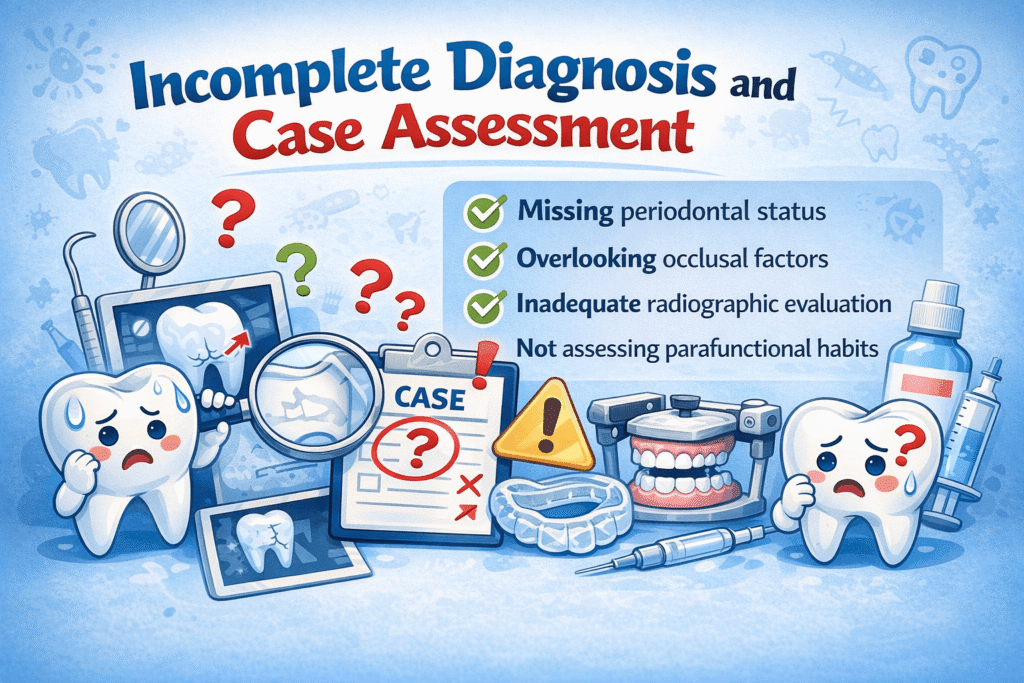
One of the most common contributors to failure is insufficient diagnosis.
Examples include:
 Missing periodontal status
Overlooking occlusal factors
Inadequate radiographic evaluation
Not assessing parafunctional habits
Small diagnostic gaps can lead to larger downstream problems—even if the procedure itself is technically sound.
 Case Selection Beyond Current Skill or Setup
Every dentist grows with experience. Problems arise when cases are taken up without:
Adequate clinical exposure
Appropriate equipment
Specialist backup when needed
This is not about ability—it’s about timing and readiness. Good case selection often prevents poor outcomes more effectively than technical skill alone.
 Compromised Treatment Planning
Rushed or simplified treatment plans can increase failure risk.
Common contributors include:
Ignoring long-term prognosis
Planning based only on cost or speed
Skipping phased or alternative options
Not considering maintenance and recall
A plan that works short-term may fail long-term if these factors are not considered.
4️⃣ Patient-Related Factors
Even the best treatment can fail if patient factors are not addressed.
These may include:
Poor oral hygiene compliance
Missed follow-ups
Medical conditions affecting healing
Unrealistic expectations
Clear communication and documentation help reduce misunderstandings and dissatisfaction later.
5️⃣ Inadequate Isolation and Operative Protocols
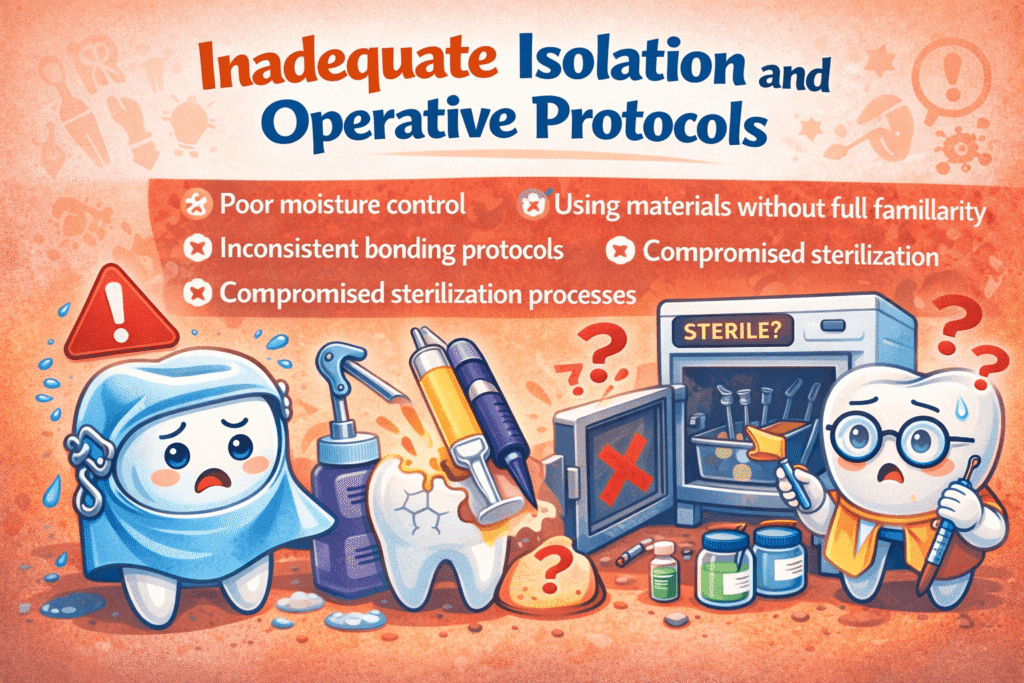
Small procedural shortcuts can significantly affect outcomes.
Examples include:
Poor moisture control
Inconsistent bonding protocols
Compromised sterilization processes
Using materials without full familiarity
Consistency in basics often matters more than advanced techniques.
6️⃣ Occlusal and Functional Oversights
Occlusion is often underestimated in daily dentistry.
Failures may arise from:
Ignoring occlusal load
Inadequate adjustment post-treatment
Not considering parafunctional habits
Functional harmony plays a major role in longevity.
7️⃣ Lack of Follow-Up and Maintenance
Treatment does not end when the patient leaves the chair.
Failures increase when:
Recall systems are weak
Early warning signs are missed
Minor issues are not addressed promptly
Maintenance is a continuation of treatment—not an optional step.
8️⃣ Documentation and Communication Gaps
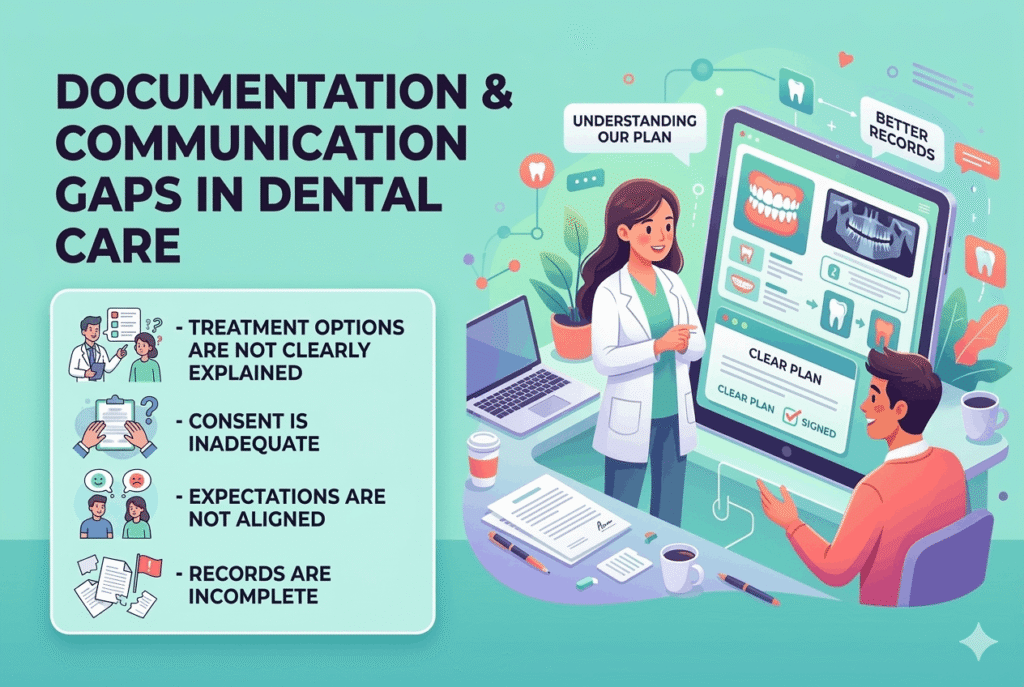
Many disputes and perceived failures arise from miscommunication, not clinical error.
Risk increases when:
Treatment options are not clearly explained
Consent is inadequate
Expectations are not aligned
Records are incomplete
Good documentation protects both patient and clinician.
 A Balanced Perspective
Clinical failures are rarely caused by one single mistake. They are usually the result of multiple small risks adding up.
Awareness, reflection, and continuous learning reduce these risks over time.